
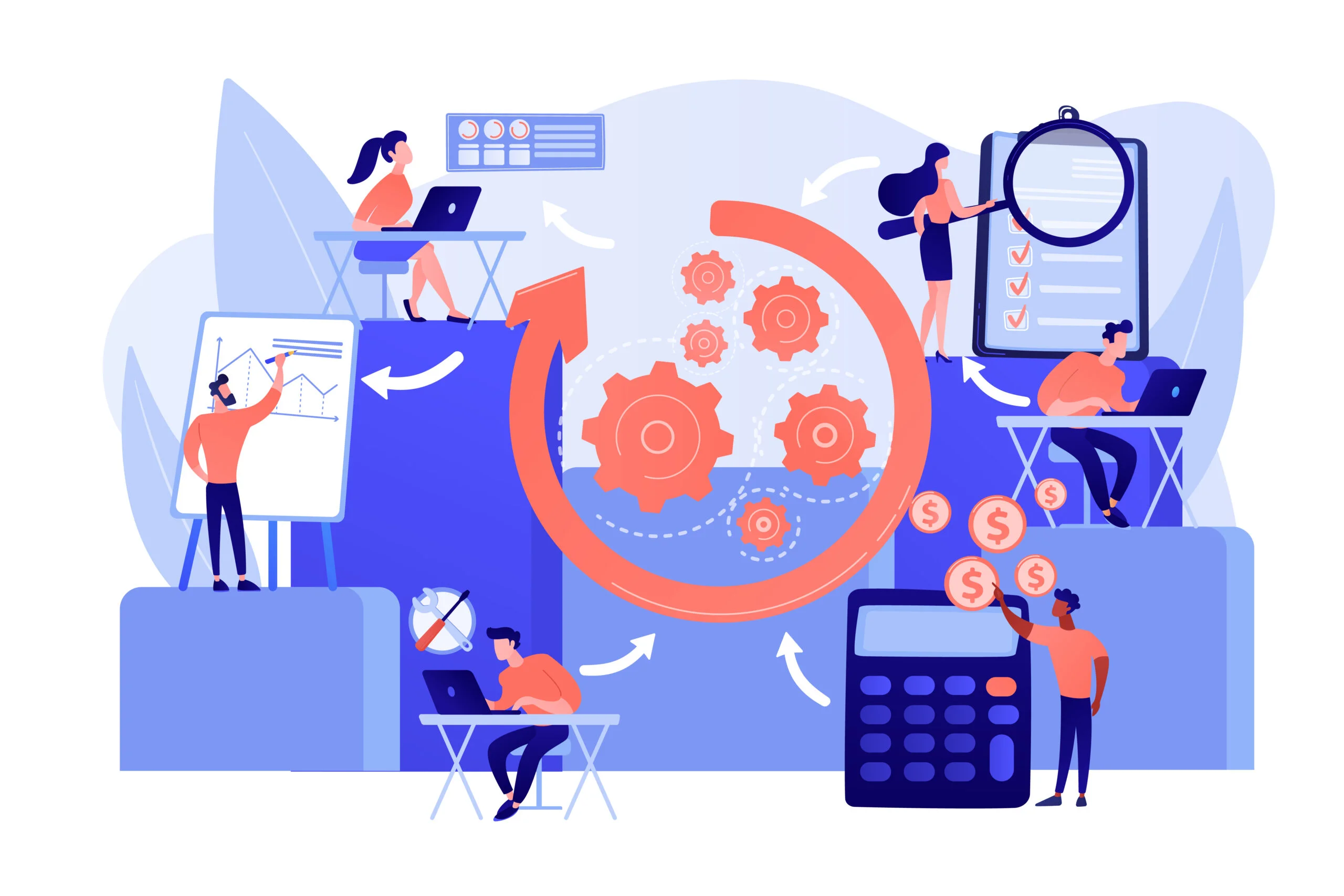
In today’s fast‑moving business environment, contracts are no longer just legal documents—they are core business assets. Contract lifecycle management (CLM) is the structured way organizations manage contracts from the moment an agreement is imagined all the way through its renewal, amendment, or termination.
For businesses that rely heavily on vendors, partners, customers, and employees, a clear CLM process reduces risk, improves compliance, and accelerates revenue. At Aveont Consulting, we help organizations design and implement CLM strategies that align with their commercial and legal goals, turning contracts into engines of efficiency rather than sources of friction.
What is contract lifecycle management?
Contract lifecycle management (CLM) is the end‑to‑end process of managing contracts from request through drafting, negotiation, approval, execution, performance, and renewal or expiry. It combines people, processes, and technology to ensure that:
- Contracts are created consistently and accurately.
- Approvals and signatures happen in the right sequence and time.
- Obligations are tracked, monitored, and fulfilled.
- Risks and opportunities are surfaced before they become problems.
Modern CLM is increasingly supported by dedicated CLM software that automates workflows, centralizes documents, and integrates with ERP, CRM, and finance systems for a unified view of contractual commitments.
The key stages of the contract lifecycle
Most CLM frameworks break the journey of a contract into a few core stages:
- Request & intake
A business need triggers a contract: a new vendor, a customer agreement, or a partnership. The request stage captures the parties involved, scope, key dates, and commercial terms so that the right stakeholders can be engaged early. - Authoring & templating
Instead of drafting every contract from scratch, organizations use clause libraries and standard templates. This speeds up creation, reduces errors, and ensures consistency with legal and commercial policies. - Review & negotiation
Legal, finance, procurement, and business teams review the draft, negotiate terms, and track changes. CLM tools often include version control, commenting workflows, and AI‑assisted clause suggestions to shorten negotiation cycles. - Approval & execution
Once terms are agreed, contracts move through predefined approval workflows (e.g., legal, compliance, finance, and senior leadership). Execution typically involves electronic signatures that legally bind the parties while keeping the process fast and auditable. - Obligation tracking & performance
After signature, the real work begins: ensuring that each party delivers on commitments around pricing, SLAs, deliverables, and governance. CLM platforms can surface obligations, deadlines, and renewals so that commercial teams do not miss critical windows. - Renewal, amendment, or termination
As contracts approach expiry, CLM systems can trigger renewal workflows, flag auto‑renewal clauses, or enable renegotiation. Amendments and early terminations are tracked and documented, preserving a clean audit trail.
Why CLM matters for modern businesses
Effective CLM delivers tangible business value beyond “just keeping contracts filed.” Core benefits include:
- Reduced risk: Standardized templates, clear approval workflows, and obligation tracking lower the chance of non‑compliance, penalties, and disputes.
- Faster time‑to‑signature: Automation and streamlined collaboration cut approval bottlenecks and shorten contract cycles.
- Better visibility and control: Centralized repositories give legal and commercial leaders a single source of truth for all contracts and obligations.
- Stronger commercial outcomes: With clear visibility into renewal dates, pricing, and performance, organizations can negotiate more effectively and optimize vendor or customer relationships.
Let Aveont build your CLM strategy
Contract lifecycle management is not a one‑size‑fit‑all solution. At Aveont Consulting, we combine legal, operational, and technology expertise to help organizations at every stage of their CLM journey—from designing the first playbook to implementing and optimizing enterprise‑wide systems.
Our CLM‑advisory services include:
- Process assessment and gap analysis
We review your current contract workflows and identify where risk, delay, and inefficiency live. - Workflow design and governance
We design stage‑by‑stage CLM workflows, role‑based approval matrices, and obligation‑tracking rules that align with your business model. - Technology selection and implementation support
We help you choose the right CLM platform (or configure existing tools) and integrate it with your core business systems. - Training and change management
We equip your legal, procurement, sales, and finance teams with the knowledge and habits to use CLM effectively every day.
If your organization is ready to move from scattered contracts and manual tracking to a structured, scalable CLM framework, Aveont Consulting can help you get there—without over‑engineering or unnecessary complexity.
Ready to start your CLM journey?
Contact Aveont today for a free 45‑minute assessment of your current contract processes and a tailored roadmap for implementing contract lifecycle management.